

HAILNETTING
Hail Netting: over 95% protection against hail
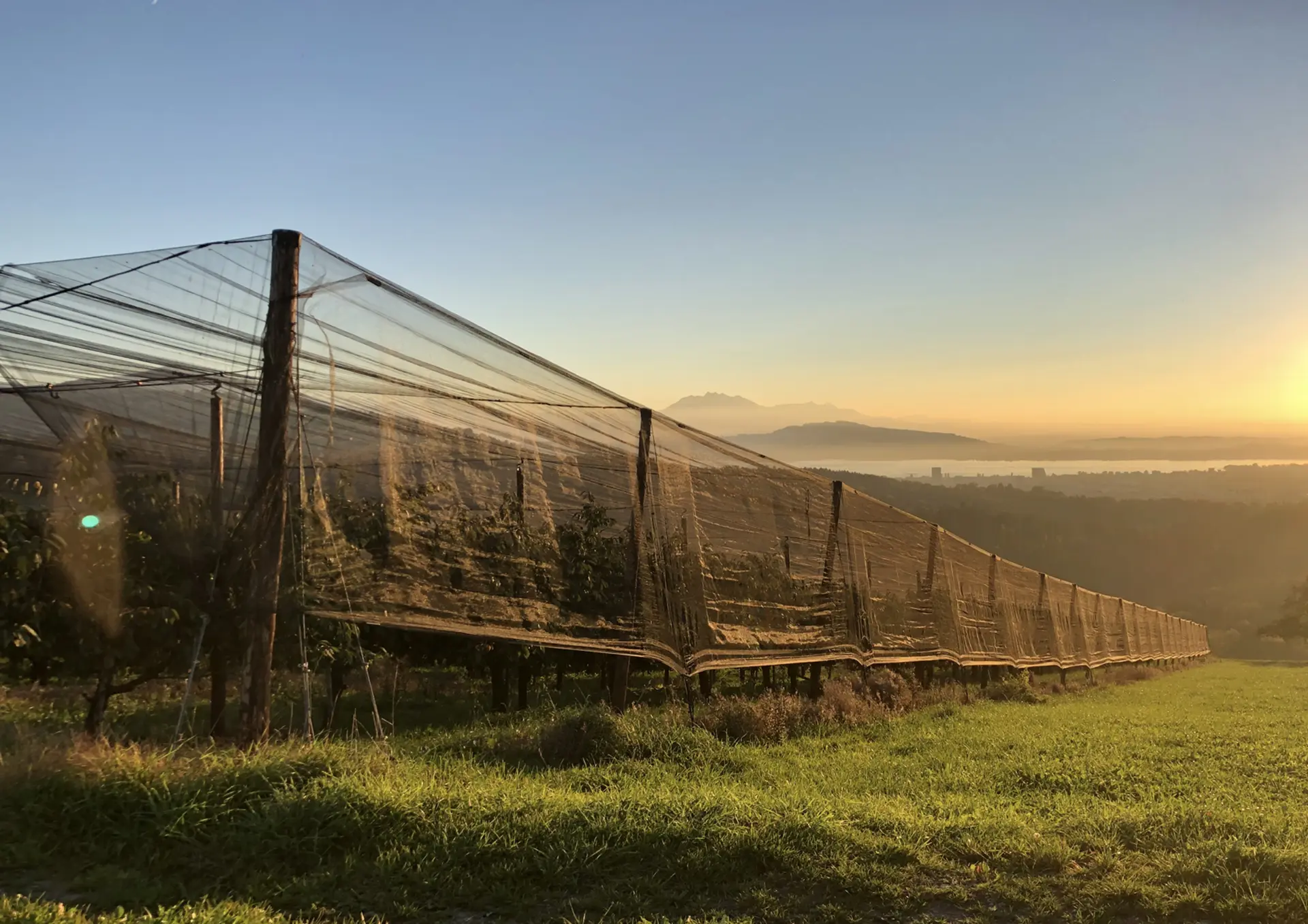
Protect your fruit-tree and vineyard harvest against hail without losing fruit quality. HDPE hail netting (anti-hail net) made in Spain, custom-made with perimeter reinforcements.

EU
What is hail netting?
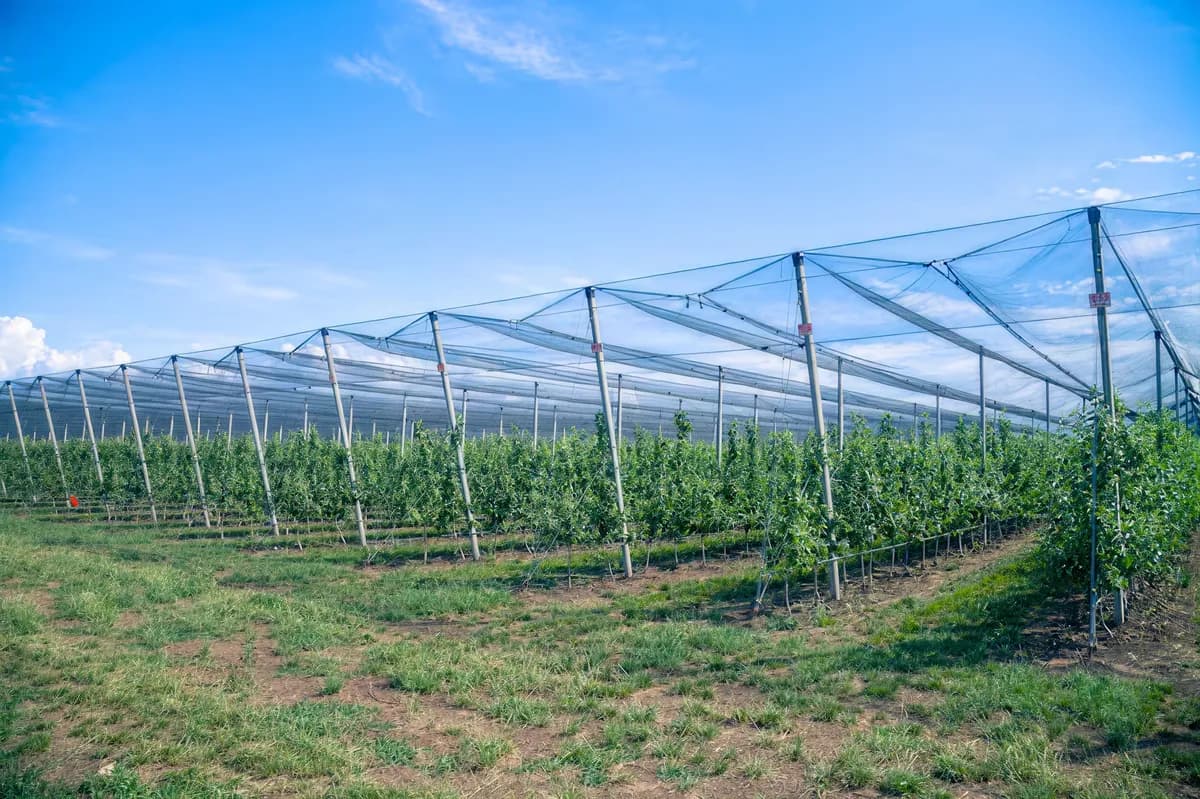
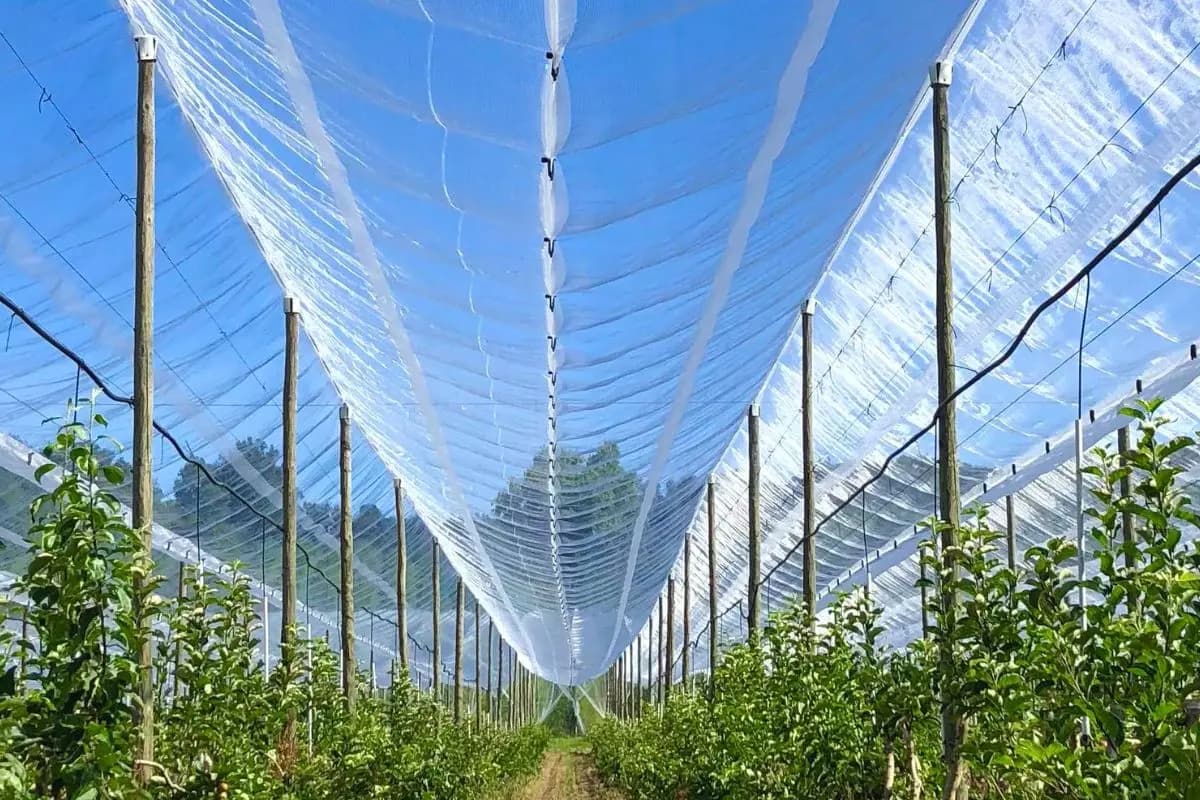
Textil Villa de Pego hail netting is a high-tenacity HDPE monofilament fabric with UV stabilisation that intercepts hailstones before they reach fruit trees and vineyards. Its open-mesh design lets light, water and air pass through, maintaining an optimal microclimate for fruit production without losing fruit quality.
How HDPE anti-hail netting protects fruit crops
Textil Villa de Pego anti-hail netting is a high-tenacity HDPE monofilament fabric with UV stabilisation that intercepts hailstones before they reach the crop. Available in two aperture variants — 2.6 × 3 mm and 5 × 4 mm — the open-mesh design allows light, water and air to pass through, maintaining an optimal microclimate for fruit production.
Woven on leno looms at our plant in Pego (Alicante), every hail-protection net is custom-made with perimeter reinforcements and hems to match the dimensions and installation system of each farm. Long service life with UV stabilisation — durability depends on the geographic zone, climatic conditions and maintenance. Stock available in standard references plus made-to-order production for special dimensions. In-house production with full control of the process at our plant. Delivery with our own fleet throughout Spain and Europe.
Advantages of HDPE anti-hail netting for fruit trees and vineyards
>95% protection
Over 95% reduction in hail impact. Proven protection even against large-calibre hail (>2 cm diameter).
Mechanical strength
High-tenacity HDPE monofilament with tensile and tear strength. Withstands snow load and wind without deforming.
UV stabilisation
High-resistance UV treatment for maximum outdoor durability. Does not degrade or become brittle with prolonged sun exposure. Ask our technical team for the estimated service life in your area.
Optimal microclimate
Open netting that lets light, rainwater and air circulation through. It does not cause condensation or reduce photosynthesis.
Long lifespan
Long service life with minimal maintenance. Fast payback compared with the cost of hail losses. Ask about the estimated durability for your geographic zone.
Custom manufacturing
Made to your plot's dimensions. Perimeter reinforcements and hems included. Spanish manufacturer with in-house production.
Ideal for organic farming
100% physical protection with no chemical residues. Compatible with certified organic farming operations and integrated production protocols.
Technical specifications
| Property | Value |
|---|---|
| Material | High-tenacity HDPE monofilament |
| Weight | 50 g/m² (2.6×3 variant) · 76 g/m² (5×4 variant) ±10% |
| Mesh aperture | 2.6 × 3 mm and 5 × 4 mm (±10%) |
| UV stabilisation | UV-stabilised for maximum outdoor durability |
| Estimated lifespan | Long service life — enquire based on geographic zone |
| Colours | Crystal (transparent), black, white, green |
| Available widths | 1 – 5.25 m seamless. Smaller sizes on request. Wider widths made by joining panels. |
Values shown are indicative and subject to manufacturing tolerances (±5% dimensional, ±10% mechanical). Data does not constitute contractual specifications.
Available colors
Anti-hail netting for orchards and vineyards: protected crops
Apple
Protection of apple orchards in intensive and super-intensive production. The netting prevents fruit marking and breakage of productive branches.
Pear
Pears are especially sensitive to hail because of their delicate skin. Anti-hail netting prevents the marking that devalues the fruit on the market.
Cherry
The cherry tree combines sensitivity to hail with sensitivity to rain-cracking. Anti-hail netting can be combined with a plastic-film cover for complete protection against hail and rain.
Vineyard
Protection of wine-grape and table-grape vineyards against hail. Systems adapted to the trellis structure. Compatible with bird netting for combined protection.
Stone fruit
Peach, nectarine, apricot and plum: stone fruit highly sensitive to hail in the final ripening stages.
Kiwi
Kiwi plantations require anti-hail protection due to their long exposure period on the vine.
Berries
Blueberries, raspberries and blackberries grown in open field are vulnerable to hail. The netting protects the growing structures and the delicate fruit. We manufacture to measure for a perfect fit to your structure.
Citrus
Hail marks the skin of oranges, lemons and mandarins, devaluing the fruit for the fresh market. Especially important in areas with frequent hail risk. Anti-hail netting is also used in citrus plantations combined with windbreak netting for complete protection.
Walnut
Hail during the fruit-growth phase causes premature drop and damage to young walnut branches. The netting protects both the crop and the tree's structure.
Hail wipes out entire harvests in minutes
A hailstorm lasting just 10 minutes can destroy 100% of a fruit orchard's production. The damage does not only affect the fruit on the tree: hail breaks branches, tears leaves and weakens the plant for the following seasons.
Agricultural losses from hail exceed 200 million euros a year in the main producing countries. The highest-risk areas suffer increasingly frequent and intense episodes due to climate change.
Without anti-hail protection, a single storm can wipe out a whole season's work.
Frequently asked questions about anti-hail netting
What is hail netting?
Textil Villa de Pego hail netting is a high-tenacity HDPE monofilament fabric with UV stabilisation that intercepts hailstones before they reach fruit trees and vineyards. Its open-mesh design lets light, water and air pass through, maintaining an optimal microclimate for fruit production without losing fruit quality.
How does anti-hail netting work?
HDPE monofilament anti-hail netting intercepts the hailstones before they reach the crop, reducing impact by more than 95%. Available in two aperture variants (2.6 × 3 mm and 5 × 4 mm), the open netting lets light, water and air through while keeping an optimal microclimate for fruit production.
How much does anti-hail netting cost?
The material price depends on the weight (50–76 g/m²), the mesh aperture, the colour and the made-up dimensions. As a manufacturer with in-house production since 1949, Textil Villa de Pego offers direct technical advice and a tailored quote. Installation cost is separate: you can install it yourself on the existing structure, hire a specialist installation company, or include the complete build of the infrastructure (posts, cables, hoops) if you do not have one yet. Ask us for a personalised quote for the material.
How long does anti-hail netting last?
Actual durability depends on the accumulated UV radiation in your geographical area and the conditions of use. TVP's HDPE is UV stabilised for maximum outdoor durability. In high-sunlight areas the service life is shorter than in areas with less solar exposure. Contact our technical team for a personalised estimate based on your location and crop.
How is anti-hail netting installed?
Hail netting is installed over the plot’s existing structure (posts, wires, arches). Textil Villa de Pego makes each net to measure, with perimeter reinforcements and hems adapted to the dimensions of your farm. For projects with new infrastructure or special dimensions, consult our technical team.
Does anti-hail netting affect pollination?
The 2.6 × 3 mm and 5 × 4 mm apertures allow bees and other pollinators to pass freely. Anti-hail netting does not interfere with the crop's natural pollination. Light transmission of 85–95% depending on colour.
Let’s talk about your project
Receive a personalised quote within 24 hours. No obligation.
WWW.TEXTILVPEGO.COM
Manufacturers since 1949