

PLASTICISEDNETTING
Plasticised Netting: rain protection for fruit crops
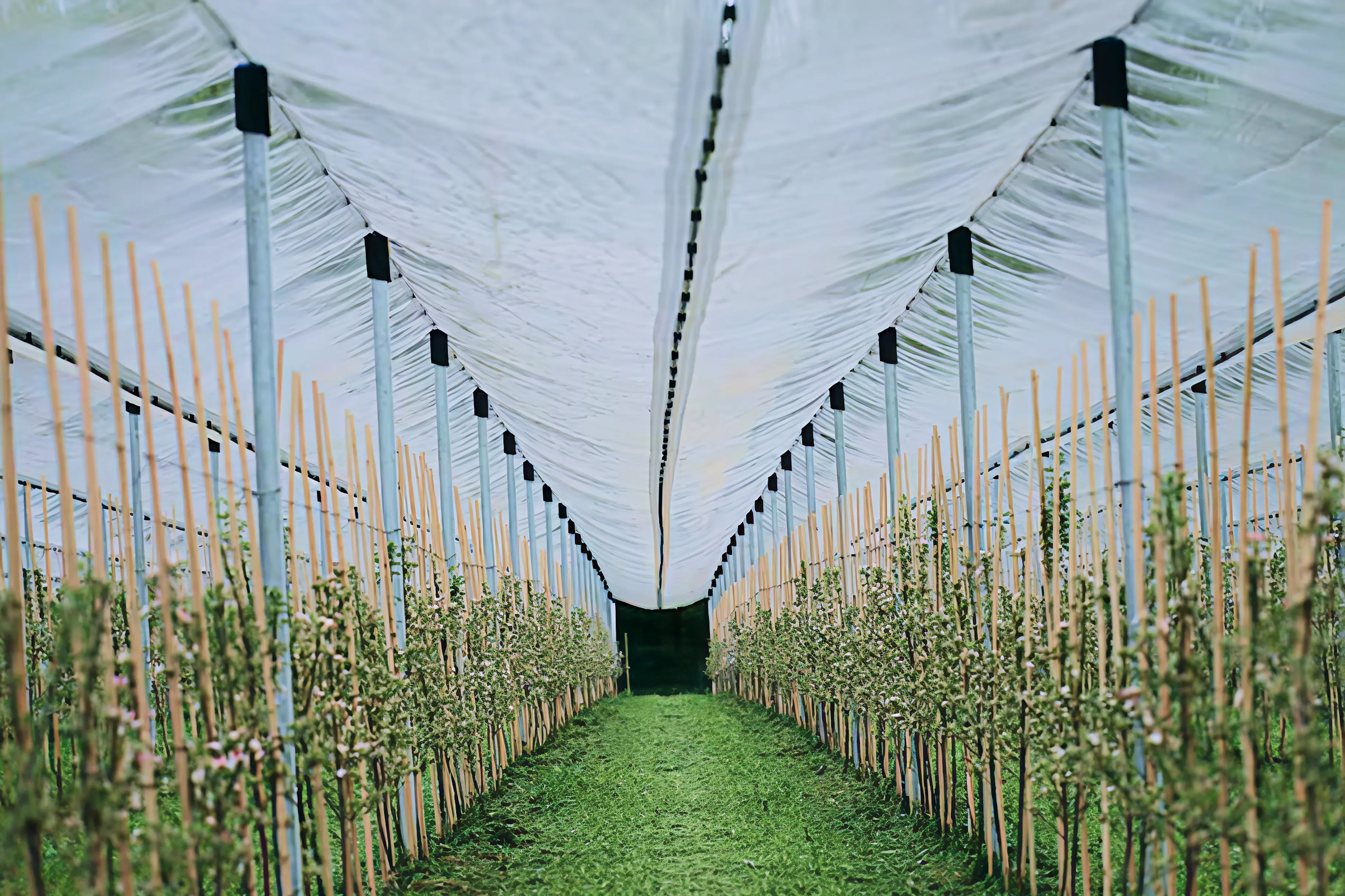
Prevent cracking and rot of ripe cherry, table grape and berries. Woven rain cover — more resistant than conventional plastic. Made in Spain.
EU
What is plasticised (rain cover) netting?
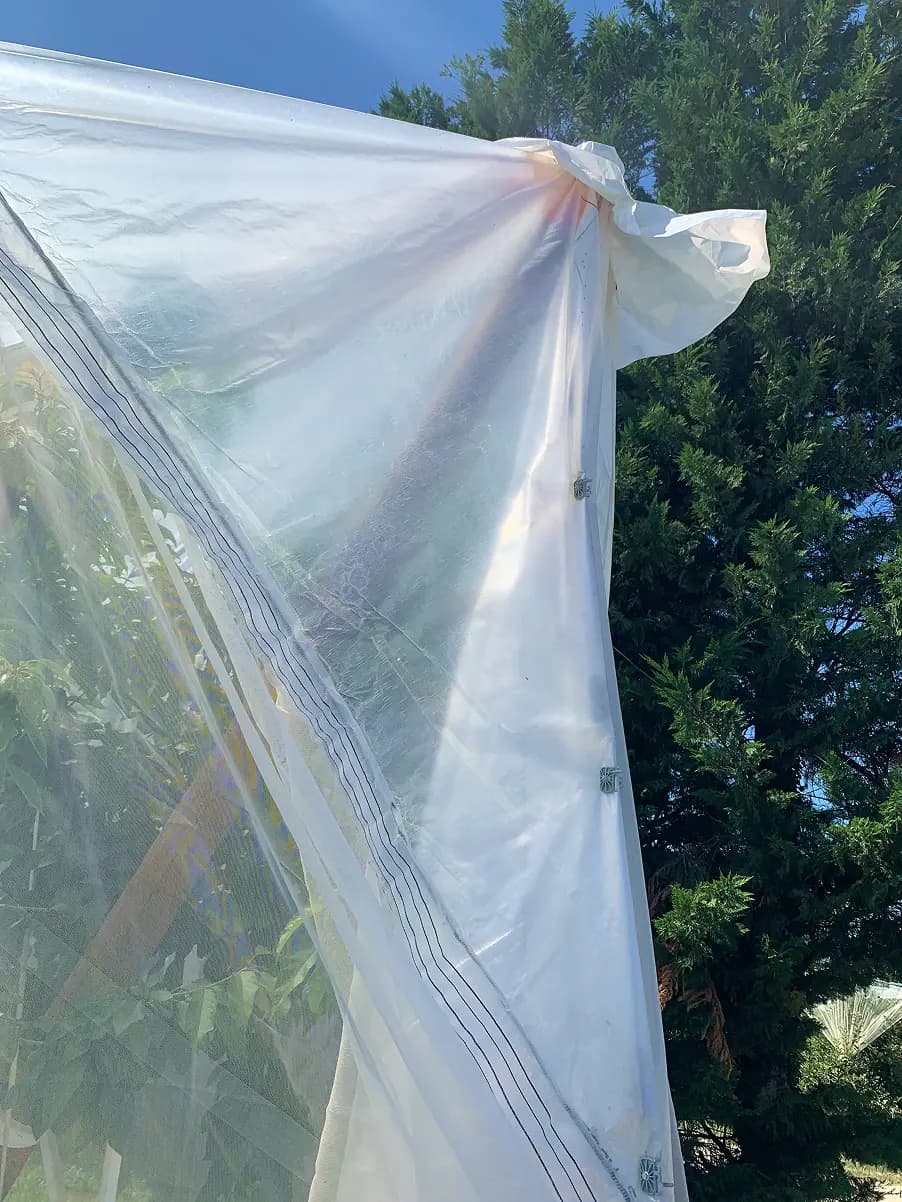
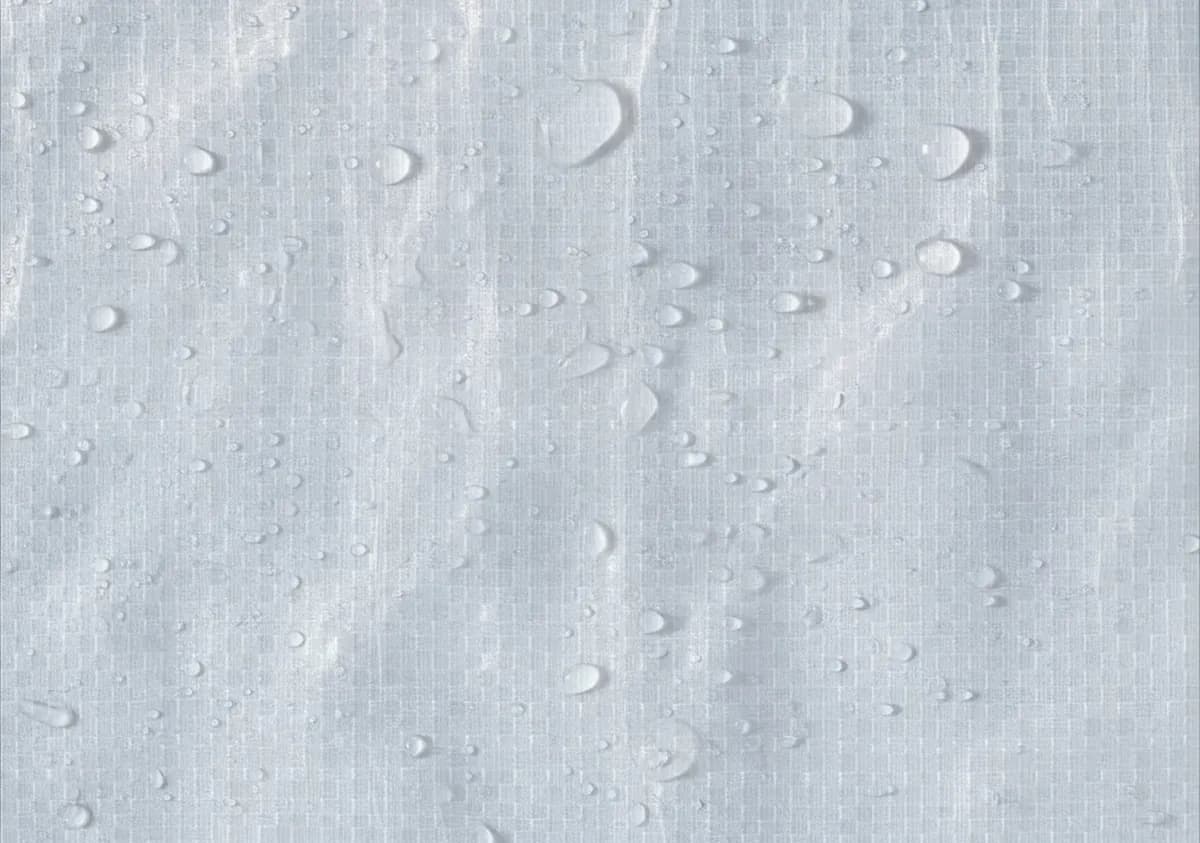
Textil Villa de Pego rain cover netting, also known as laminated raffia, is an HDPE raffia fabric woven on a loom and laminated with LDPE for total waterproofing. The result is a 100% waterproof rain cover, more resistant than conventional plastic sheeting, that prevents cracking and rot of ripe fruit.
How waterproof rain cover netting (laminated raffia) works for crop protection
Textil Villa de Pego rain cover netting — also known as laminated raffia or plasticised raffia — is a high-density polyethylene (HDPE) raffia fabric woven on a loom and laminated with low-density polyethylene (LDPE) to achieve total waterproofing. The result is a 100% waterproof rain cover with a tensile strength of 750 N/5cm in both directions, far superior to a simple plastic sheet. Whereas conventional plastic tears in the wind, hail or under the weight of accumulated water, rain cover netting offers greater durability thanks to its woven structure.
1-Sided version (130 g/m²): LDPE lamination on one face of the fabric. 2-Sided version (165 g/m²): LDPE lamination on both faces, which additionally prevents the build-up of dust and algae over time, keeping the fabric transparent for more seasons. Crystal colour with 80-85% visible light transmission. Density of 21 warp threads and 20 weft threads per decimetre. Lateral reinforcements of 80 warp threads. Manufactured at our plant in Pego (Alicante) with made-to-measure finishing. Manufacturing width of 4 metres; for greater widths, panels are sewn together. In-house production and made-to-measure finishing.
Advantages of waterproof plasticised netting for fruit crop protection
100% waterproof
LDPE lamination that delivers 100% impermeability to rainwater. It completely prevents water reaching the fruit, avoiding cherry and grape cracking and the fungal diseases caused by direct moisture.
Superior mechanical strength
Tensile strength of 750 N/5cm in warp and weft. The woven HDPE raffia base gives it a solidity conventional plastic sheeting does not have. It resists wind, pooling water and installation stresses without tearing.
80-85% light transmission
Crystal colour transmitting 80-85% of total visible light and 55-60% as diffuse light. Diffuse light penetrates evenly throughout the crop canopy, favouring photosynthesis without scorching from direct radiation.
Reduces fungal diseases
By keeping rainwater off fruit and leaves, it sharply reduces the incidence of Botrytis cinerea, Monilia and other rots. Less moisture on the fruit means fewer plant-protection treatments are needed.
2-sided version: self-cleaning
Lamination on both faces (165 g/m²) stops dust and algae building up on the fabric surface. That keeps transparency and light transmission constant throughout the service life, with no cleaning required.
Custom manufacturing
We make every piece to the dimensions of your plot and structure. Side reinforcements of 80 warp threads included. Manufacturing width 4 m; panels are sewn together for greater widths. Spanish manufacturer with in-house production.
Compatible with organic farming
100% physical protection against rain, with no chemical residues. Compatible with certified organic farming operations and integrated production protocols. Keeping the fruit dry reduces the need for fungicides.
Technical specifications
| Property | Value |
|---|---|
| Material | HDPE raffia weave with waterproof LDPE lamination |
| Weight | 130 g/m² (1 side) / 165 g/m² (2 sides) |
| Thread density | Warp: 21 threads/dm · Weft: 20 threads/dm |
| Tensile strength | 750 N/5cm (warp) · 750 N/5cm (weft) |
| Light transmission | 80–85% total transmission / 55–60% diffuse light |
| Thermicity | 45–50% |
| Waterproofing | 100% waterproof against rainwater |
| UV stabilisation | UV-stabilised for maximum outdoor durability |
| Colour | Crystal |
| Side reinforcements | 80 warp threads |
| Estimated service life | Long service life — enquire based on geographic area |
| Available widths | 1 – 4 m seamless. Smaller sizes on request. Wider widths made by joining panels. |
Values shown are indicative and subject to manufacturing tolerances (±5% dimensional, ±10% mechanical). Data does not constitute contractual specifications.
Crops protected with waterproof rain cover netting
Cherry
The cherry-roof system (plastic cover for cherry trees) with rain cover netting is essential in areas with rain during ripening. It prevents cracking and brown rot (monilia), the two main causes of loss in cherry. Can be combined with anti-hail netting on the same structure for complete protection.
Table grape
Protection of table grape bunches against direct rain. Prevents Botrytis cinerea and berry cracking during veraison and ripening. Compatible with bird netting on the sides for complete protection of the table grape vineyard.
Berries
Protection against rain that causes grey mould (Botrytis) in blueberries and raspberries. The rain cover netting is installed over existing berry tunnels and structures, keeping the fruit dry during ripening rains.
Stone fruit
Peach, nectarine and plum can suffer cracking and rot from direct rain during ripening. The waterproof cover protects the fruit without affecting ripening thanks to its high light transmission (80-85%).
Kiwi
Kiwi is sensitive to excess humidity during ripening. The waterproof rain cover netting protects the fruit from direct rain and reduces the incidence of Botrytis and other fungal diseases that lower the fruit's commercial quality.
Tropical crops
Mango, lychee and avocado: protection during flowering, fruit set and ripening. The waterproof cover prevents tropical rains from damaging the flowers and developing fruit.
Rain destroys ripe cherries, grapes and berries
Rain-induced cherry cracking is the most devastating disease problem in cherry. When water contacts the skin of a ripe cherry, the fruit absorbs moisture by osmosis and bursts. In the main production areas of Extremadura, the Jerte Valley and Aragón, whole seasons are lost to a single rainfall during ripening.
On table grapes, rain causes Botrytis cinerea rot and berry cracking. On berries (blueberries, raspberries), excess moisture generates grey mould. On kiwi, direct rain during ripening favours fungal infections that reduce commercial quality.
A single rainfall at the wrong moment can wipe out up to 80% of the harvest's value. Rain cover netting is the only physical protection that prevents water from contacting the fruit.
Frequently asked questions about agricultural waterproof rain cover netting
What is plasticised (rain cover) netting?
Textil Villa de Pego rain cover netting, also known as laminated raffia, is an HDPE raffia fabric woven on a loom and laminated with LDPE for total waterproofing. The result is a 100% waterproof rain cover, more resistant than conventional plastic sheeting, that prevents cracking and rot of ripe fruit.
Does rain cover netting for crops create a greenhouse effect?
No, if it is installed correctly. Rain cover netting is a waterproof fabric used as a roof cover. The sides of the structure are left open or covered with permeable netting (for example, insect mesh netting or windbreak netting), which allows natural air circulation and prevents overheating. The ventilation comes not from the product but from the design of the installation.
How much light does clear rain cover netting transmit?
Textil Villa de Pego clear rain cover netting transmits 80-85% of global visible light and 55-60% as diffuse light. Diffuse light spreads evenly across the whole crop canopy, promoting photosynthesis and reducing the risk of sunscald on the fruit.
Can rain cover netting be combined with anti-hail netting?
Yes. It is a common combination, especially on cherry and stone fruit, where the fruit needs simultaneous protection against rain (cracking) and hail (impact). Both nets are installed on the same structure. Textil Villa de Pego manufactures both products and can advise you on the optimal configuration for your plot.
How many years does rain cover netting last?
Textil Villa de Pego rain cover netting incorporates UV stabilisation (500H QUV) for maximum outdoor durability. Service life depends on UV radiation, climate conditions and the use of agrochemicals. The 2-Sided version keeps its transparency for longer by preventing the build-up of dust and algae. The use of agrochemicals containing sulphur, chlorine, iron or copper can reduce the fabric's durability. Contact our team for an estimate based on your area.
What is the difference between single-coated and double-coated rain cover netting?
The single-coated version (130 g/m²) is LDPE-laminated on one side of the fabric only. The double-coated version (165 g/m²) is LDPE-laminated on both faces, which stops dust and algae building up on the surface. The double-coated version is recommended for long-term installations or areas with high ambient humidity.
Why choose rain cover netting instead of conventional plastic film?
Rain cover netting is just as waterproof as plastic film but with far higher mechanical strength: 750 N/5cm in both directions thanks to its woven HDPE raffia base. Conventional plastic film tears in the wind or under the weight of pooled water; laminated netting withstands both thanks to its textile structure.
What is the maximum manufacturing width?
The manufacturing width is 4 metres. For greater widths, panels are sewn together. Our making-up department prepares each piece to measure to suit the dimensions of your structure and plot, with side reinforcements included.
Are rain cover netting, laminated raffia and cherry rain covers the same product?
Yes. It is the same type of product: a woven HDPE raffia fabric laminated with LDPE to make it waterproof. In Spain it is known as 'malla plastificada' or 'rafia plastificada'. In Chile as a plastic cherry cover. In Argentina as laminated raffia. In Colombia as drying-shed plastic. Textil Villa de Pego exports to all these markets.
Let’s talk about your project
Receive a personalised quote within 24 hours. No obligation.
WWW.TEXTILVPEGO.COM
Manufacturers since 1949